|
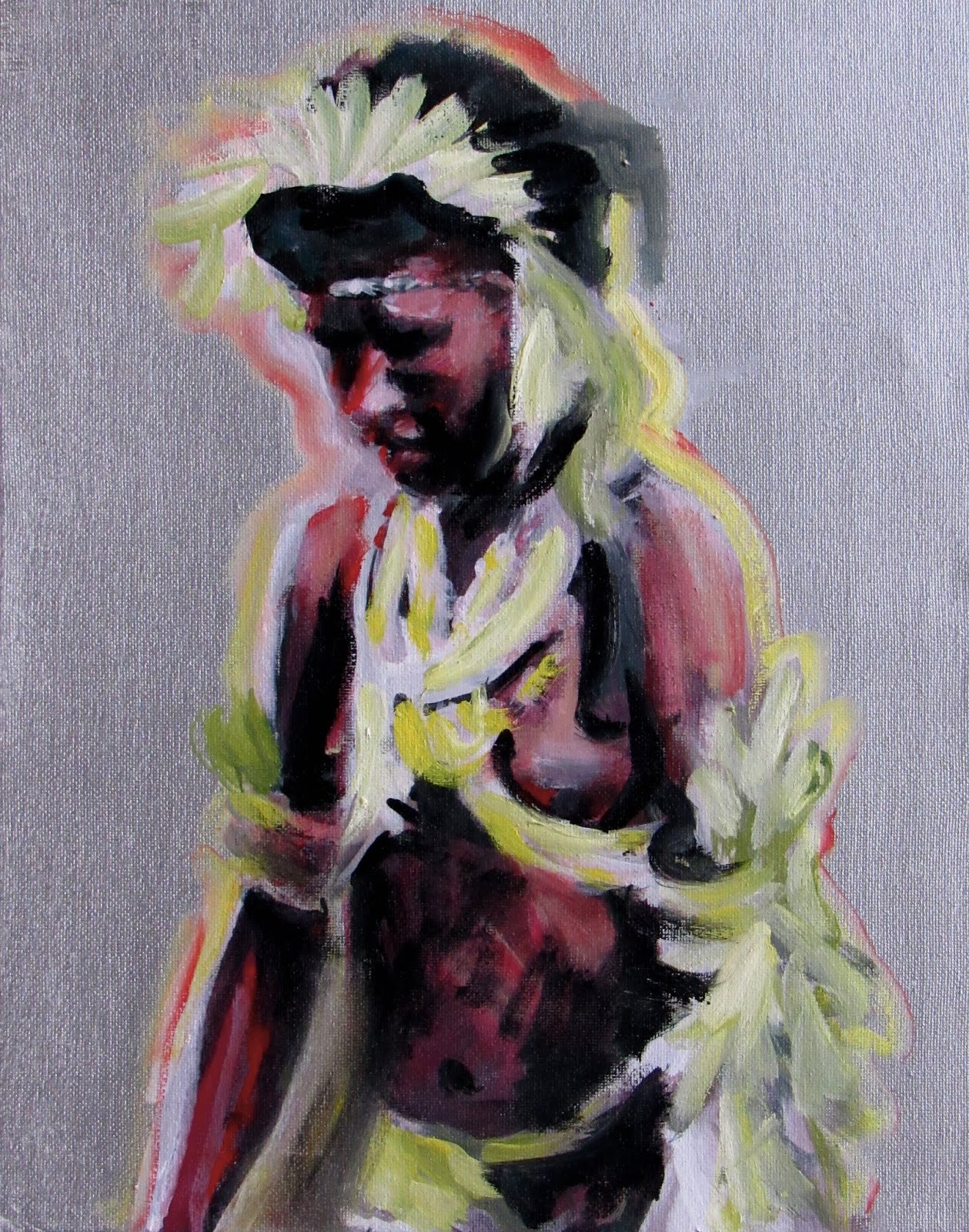
Roro, South Coast, Papua
24" x 14", oil on canvas, 2012 |
There has been a disproportionate amount of popular music in the Top 100 2012 list that doesn't really reflect all the music I have been playing on my turntable. Academic style field recordings from all over the world has been and continues to be the main focus of my record collection and what I choose to play at home as well. Within these records I like the older ones the best, recorded and collected at a time when there still was little influence of the Western popular music styles onto the traditional music of a certain ethnic group somewhere on this planet. A whole bunch of academic ethnomusicologists, as well as hobbyists with high ideals, traveled around the world in the middle and later parts of the 20th Century, to record and catalog the music they thought of as a fast disappearing local cultural identity. One of the most prominent collectors out there was Alan Lomax, who spent his life collecting and recording the folk music of the most remote regions of the world. He started documenting the various folk styles of the most remote areas of the US but soon broadened his scope to the whole world. His ambition was to have a giant library that collected all the traditional musics from around the world. He was part of the Library of Congress that focused mainly on the music of the US including all of the various immigrant group's traditional music identities, and founded the World Library of Folk and Primitive Music. All the music had to be available to any and every person interested. The scope of that library was broad and ambitious but only 18 volumes were ever compiled by the Columbia label. All 18 of these are sought after and very hard to come by. I just scored my second in a record store in Miami: The Columbia World Library of Folk and Primitive Music, Collected and Edited by Alan Lomax – Indonesia, Edited by Dr. Jaap Kunst, Indisch Museum, Amsterdam is the full identifying title of the record in front of me. The record is divided into four geographical sections: New Guinea, Moluccas, Borneo, and Bali. New Guinea is subdivided into Eastern New Guinea (now Papua New Guinea) and Western New Guinea (now part of the Republic of Indonesia). The first song from this album to enter into the Top 100 is called Atestsua-Aroba and is from the Papua part of New Guinea, it's a song by Roro natives, who live scattered in small villages along the South Coast and on Yule Island. The three individuals in the painting (against a backdrop of once again my back yard) are adapted from a photograph included in the record album. The song was recorded by Dr. Kunst and the photograph is presumably his as well.