|
Cover of Les Dani de Nouvelle Guinee, Vol. 1 (r) and 2 (l)
|
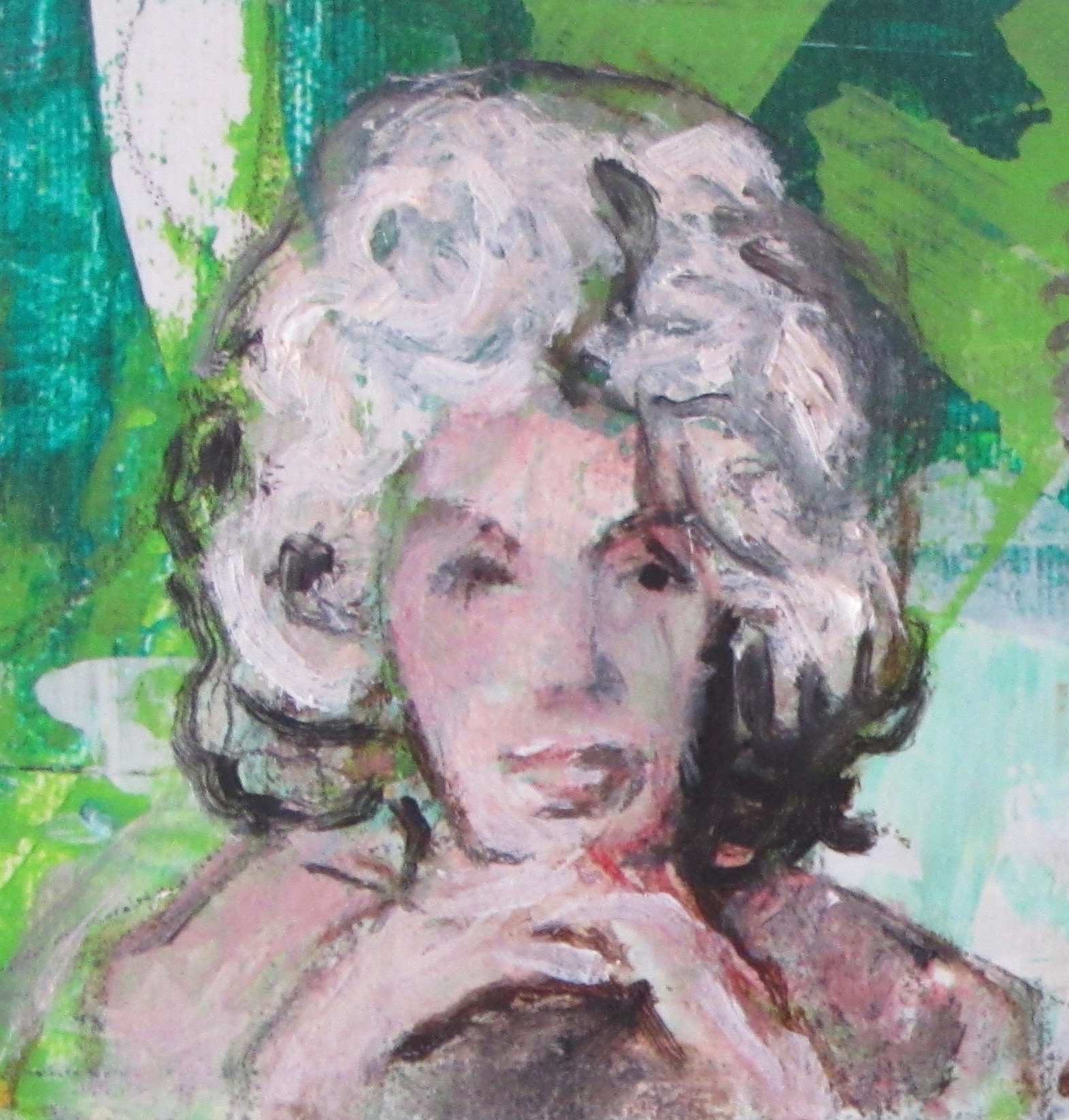
Hurricane Ian has been highly disruptive in many aspects of life. Today marks two weeks since it struck just a little north from where I am. Unlike some others I know, I was lucky and only had to deal with a foot of water in my studio and fallen trees. I only got back to work in my studio three days ago. The result above, is based on the cover images of two French research recordings, Volumes 1 and 2 from
Les Dani de Nouvelle Guinee. [CRAVA/nordsud music, 2001] A track from each volume is listed in the Top 100 this year. I'll be more specific in a moment but now I'd like to write a few words about my experience with Ian. I learned something about myself these past two weeks, and this is that I'm fairly conservative; I don't like the lawlessness observed since Ian struck; I don't like anarchy. Growing up in the punk-rock era I always applauded the idea of anarchy. Anarchy was leftist revolution, so I thought, but now I see the world reversed. Now that some parts of 70s/80s ideologies have been accomplished, revolutionary ideas have shifted to the right in an effort to undo these accomplishments. I don't like it at all! Regardless of political leaning I see that humanity, in the context of hierarchies, is anarchy at heart.
As far away from the realities of the aftermath of a natural disaster in the US, is the music of the Dani people of the Western New Guinea (Irian Jaya) province of the Republic of Indonesia. The two volumes of Les Dani de Nouvelle Guinee are filled to the max with gems of ethnographic recordings. From Volume 1 comes, like last year, Cour D’amour, Air Doux, Tiom, a beautiful example of polyphonic singing by men and women, and from Volume 2 Live beetle jew's harp, where a live (and buzzing) beetle is attached to a wooden splinter and is used like a jew's harp. I am mesmerized by this instrument both for its aesthetic charm and the concept of the extension of the human voice by using a live animal. However beautiful the music, it was not the main objective of the three researchers who compiled the cds, but came to study the traditional making and trading of salt. The three anthropologists are Anne-Marie and Pierre Petrequin, and Olivier Weller. Weller was also the photographer on the expedition and I assume he is responsible for the source images for the above painting that appeared on the cover of the cds. I did not paint Olivier Weller but did put Anne-Marie and Pierre Petrequin together in a double portrait.
 |
Pierre and Anne-Marie Petrequin
|
Back to States and to the time when the punk-rock atmosphere was still imbuing the minds of young people with ideals of equality, freedom, and other such good things. Pere Ubu came of age during the same period I did too. Mostly active in the 80s the band was a regular high-achieving band in my Top 100 lists of the 90s and both
Laughing and
Waiting for Mary had been listed during that decade.
Laughing, in the classic line-up that I've painted: Tom Herman; Tony Maimome; Allen Ravenstein; Scott Krauss; and David Thomas, is from
The Modern Dance [Plan 9, 1978] while
Waiting for Mary is a recording from the live TV show
Night Music [NBC, 1988-1990] hosted by David Sanborn. In the performance, from 1989, Tom Herman had been replaced by Jim Jones and Chris Cutler, and the band is backed by a slew of renown musicians including Sanborn himself, and Debbie Harry of Blondie.
 |
David Thomas; Scott Krauss; Tom Herman of Pere Ubu
|
 |
Tony Maimone; Allen Ravenstine of Pere Ubu
|
There's one more painting that's somewhat new that I need to display and talk about, even though I already did so in the context of the
100 Faces from the Top 100 2022 preview painting from earlier this year. First I'll copy what I wrote on May 11th about the people portrayed: "The record
Musica
Sveciae: Fornnordiska Klanger means
a lot to me as I'm interested in prehistoric art and the origin of
music. Professor Cajsa Lund, who produced the record, and her
collaborator
Äke
Egevad are professionals who research bot interests and use
archaeological evidence to reconstruct sounds from the prehistoric era.
Two tracks from the album are listed in the top 100: the sound of a
bull-roarer
and a performance on the
Kantflöjter
(flute)." Only one painting will suffice for the two tracks since there are no other individuals I know of associated with the two works of music-archaeology.
 |
| Äke
Egevad/Cajsa Lund |